The Wetland Lab’s mission is to investigate sustainable solutions for construction by exploring local materials in the GCC countries. This began with researching ways to reduce CO2 emissions in the production of Portland cement.
The construction industry contributes to 10% of total carbon emissions globally through the use of materials such as concrete and steel. In pursuit of a pragmatic solution,waiwai investigates the notion that the future vernacular of our cities can lie in industrial waste.
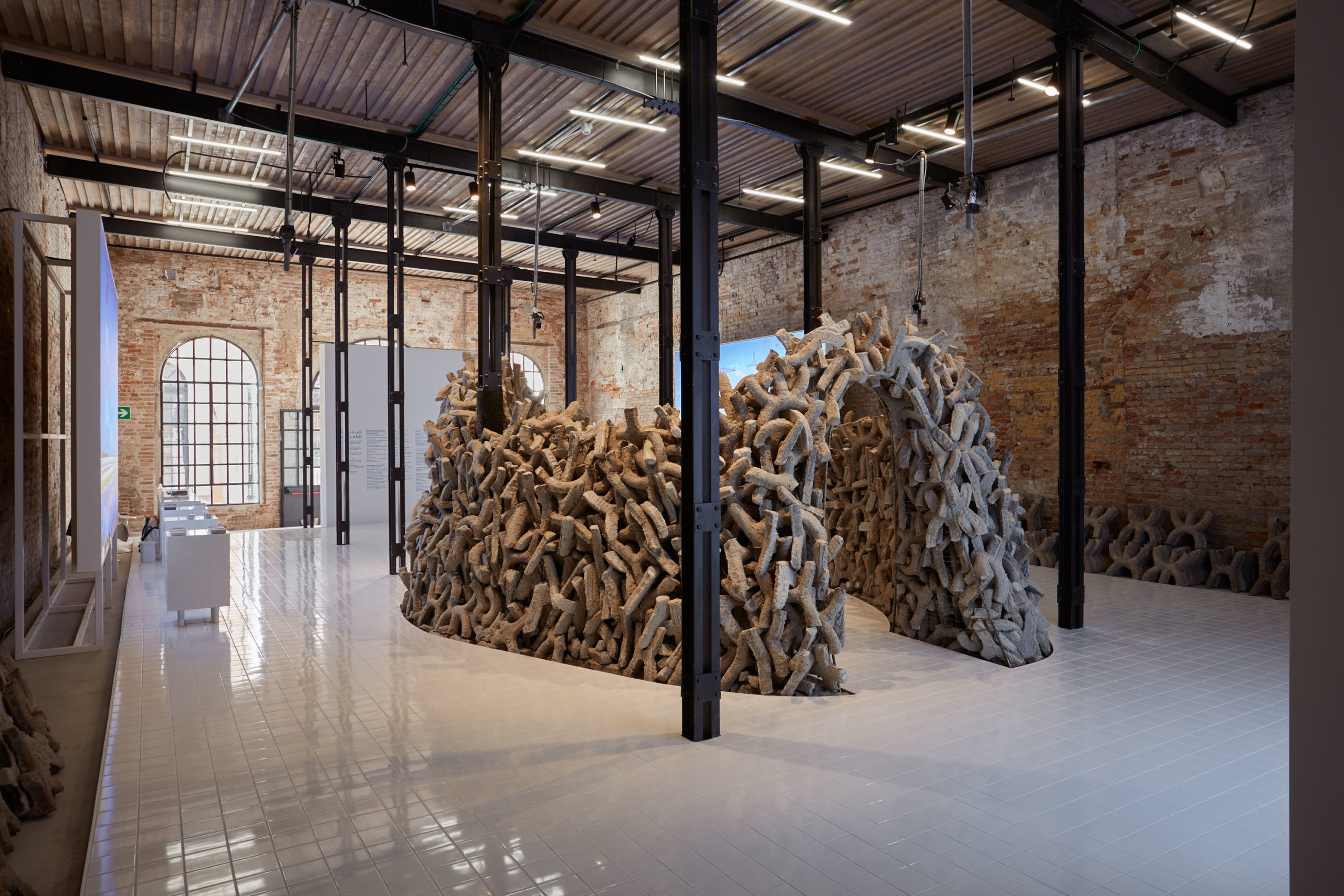
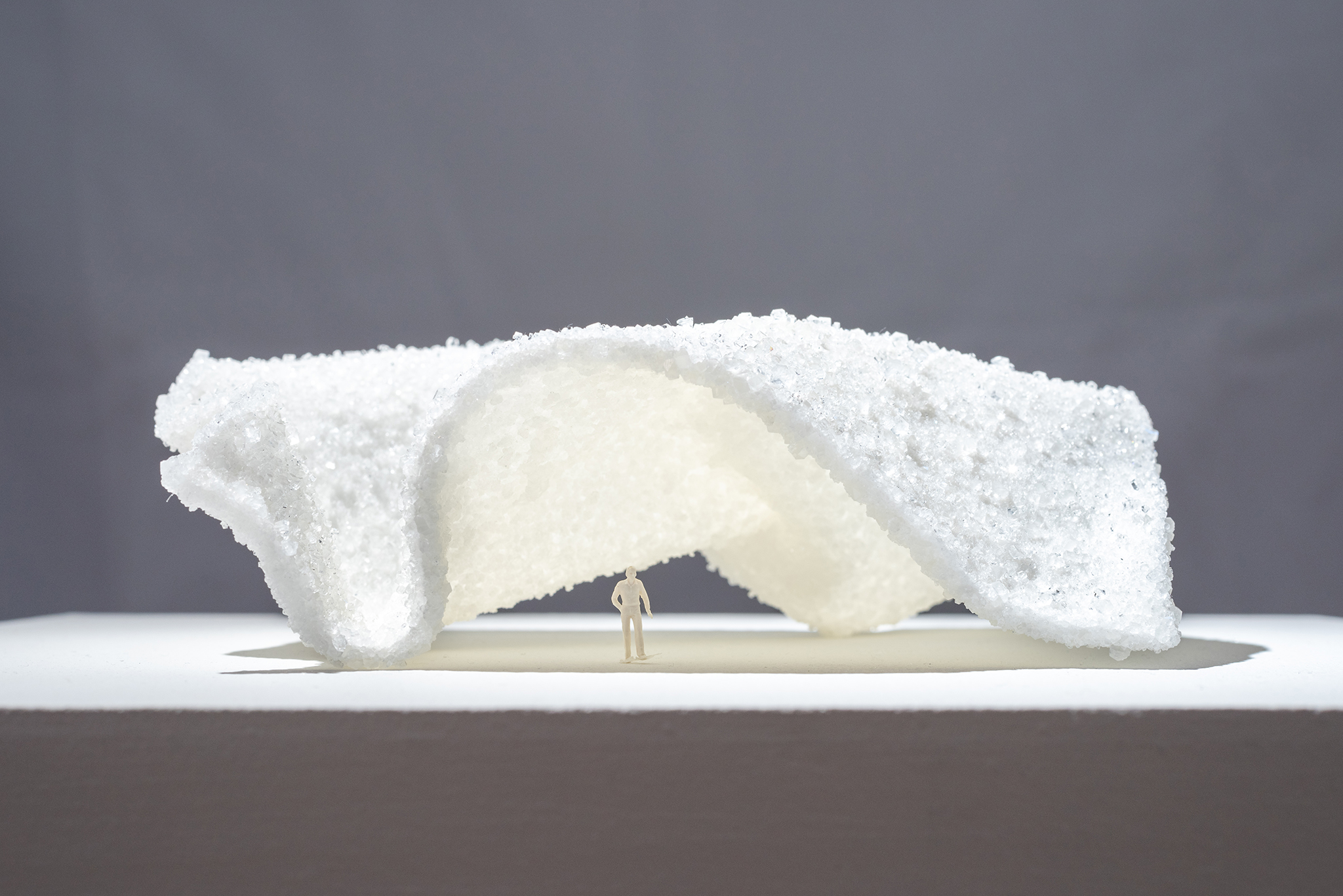
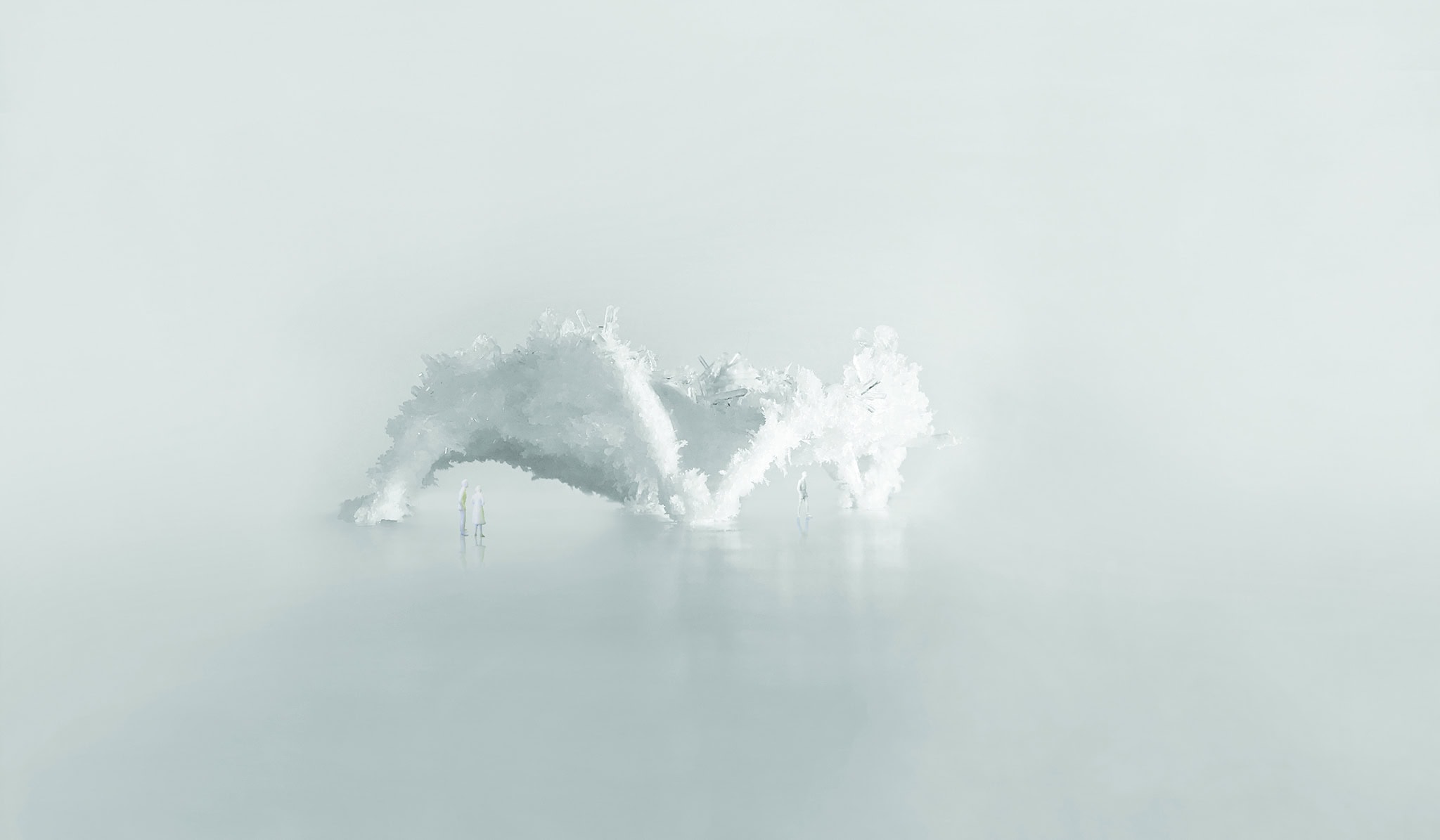
The National Pavilion UAE at the 2021 Venice Biennale demonstrated wawai’s vision for the future vernacular. A case study for an alternative to the universalizing premise of modern architecture, the pavilion featured a prototype modular structure built from cement using magnesium oxide. The prototype’s form is an ode to traditional coral-block houses in the UAE, demonstrating how the future vernacular does not reject the past but looks to it for inspiration.
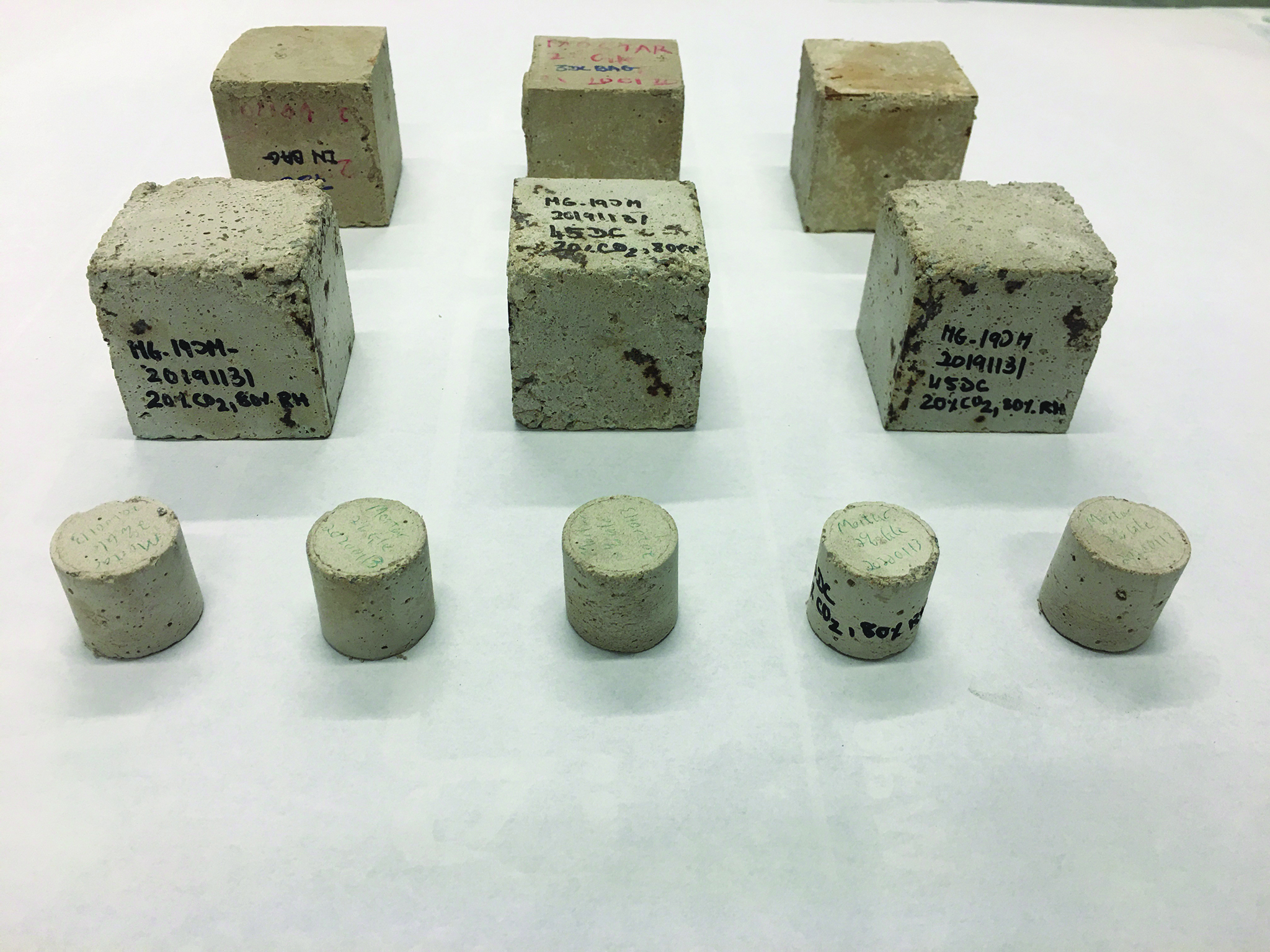
The Abu Dhabi sabkha contains a salt-rich binding agent that can be used in a cement like compound. Mining the sabkhas would damage this complex ecosystem, and instead the Wetland Lab looked to wastewater brine, a byproduct of industrial desalination. In collaboration with New York University Abu Dhabi, waiwai developed a process of extracting magnesium oxide from brine, as an alternative to the composition of conventional cement.
The Wetland Lab reveals the possibilities of recycling industrial waste in building materials and how approaching new methods can assist with reducing ecological degradation.
EXPERIMENT 1.0:
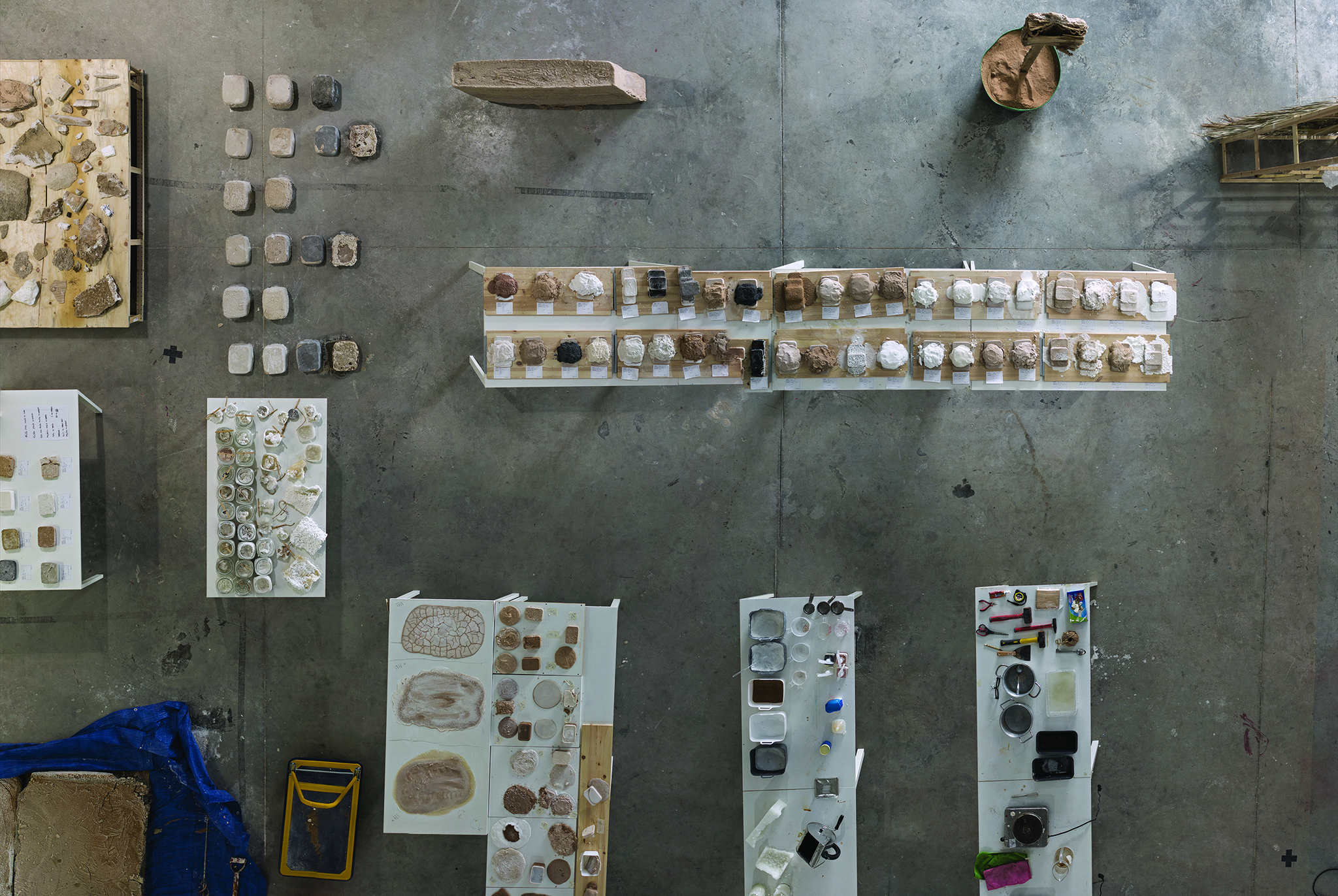
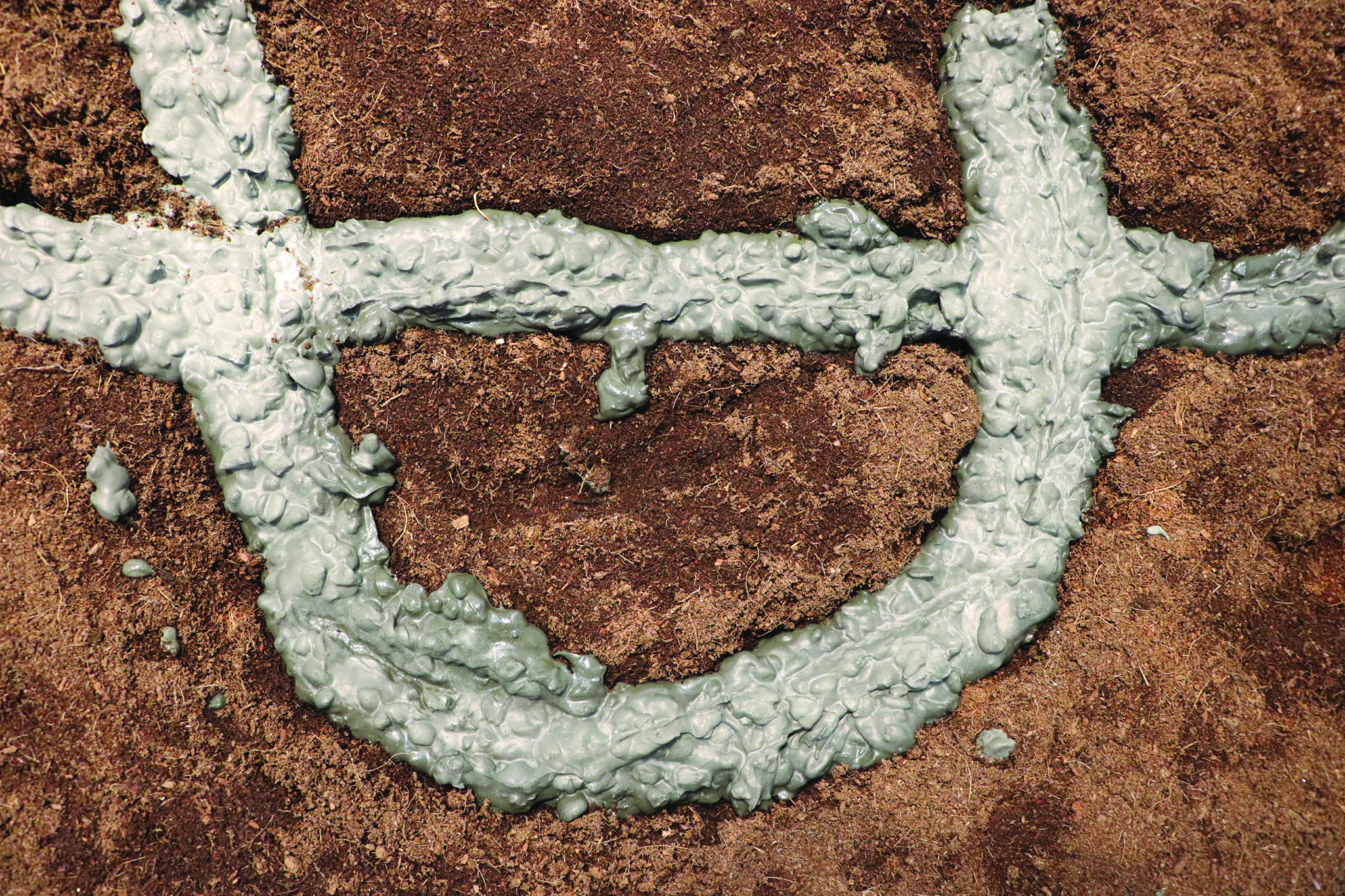
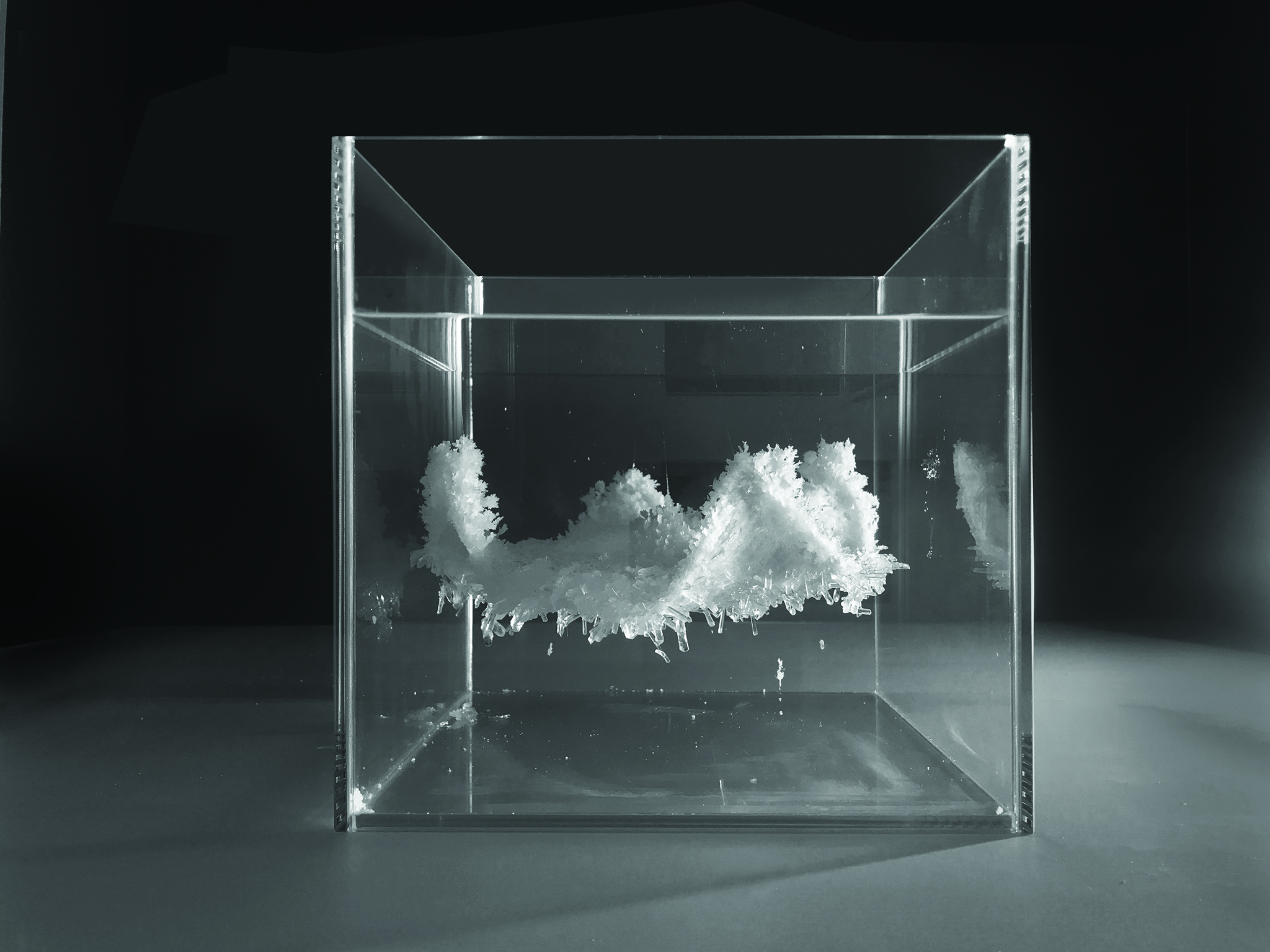
The initial attempt was to crystallize and create complex structures and forms using various types of fabric, water, and salts to arrive at the optimal combination of conditions to create crystals.
EXPERIMENT 2.0:
Research into the minerals and substances found in the sabkha informed the second phase of research, which focused on structural durability. This included materials such as plaster, sand, salt, and clay. The experiments studied the aesthetic and scientific aspects of the material by testing different finishes.
EXPERIMENT 3.0:
The third phase of research involved interactions between various collaborating institutions, including New York University Abu Dhabi, the American University of Sharjah, and Tokyo University. These collaborative experiments led to the development of an alternative to Portland cement through the use of extracted brine.
Text: Extracts from “The Wetland Lab,” by Lela Sujani, originally published in waiwai’s “The Future Vernacular” brochure (2022)
More information:
Wael Al Awar. Can Industrial Waste Be Our Future Vernacular? – TED